Have you ever wondered how to build an AI app that could actually make you money?
Well, I've decided to take on that challenge and document the entire process for you.
In this article, I'll walk you through my journey of creating an AI-powered cartoon image generator app with the goal of making $1,000 in profit.
From the technical setup to monetization strategies and marketing plans, I'll share everything I've learned so far.
Technical Setup: Using AI and No-Code Tools to Build the App
To get started, I used a combination of AI and no-code tools to build the initial version of the app. Here's a breakdown of the tech stack:
- Lovable: This no-code app builder was perfect for the initial development. It made it easy to set up Stripe integration for payments and connect to Supabase for the backend and user authentication.
- OpenAI Image Generation API: This powerful API allows us to convert uploaded images into various cartoon styles.
- GitHub: For code management and version control.
- Cursor: An advanced development environment that provides access to AI models like Gemini 2.5 Pro Max for coding assistance.
- Vercel: For app hosting and deployment.
Learn more about how to use Cursor here.
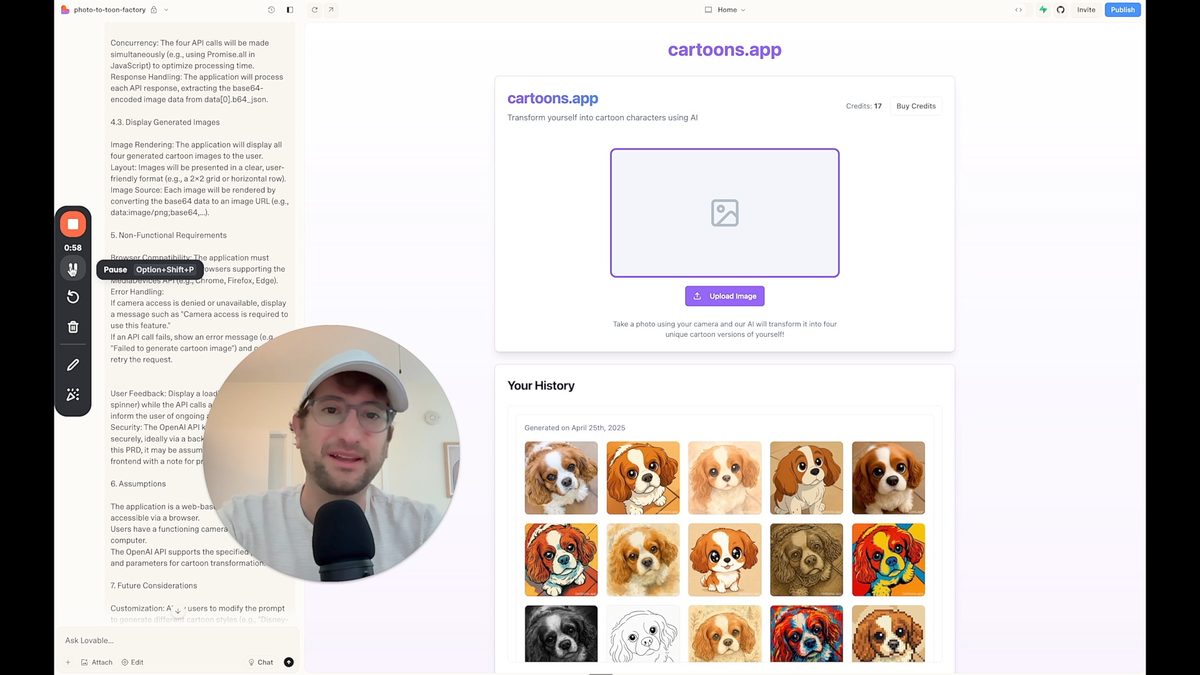
Step 1: Building the Initial App with Lovable
I started by creating the basic structure of the app using Lovable. This no-code platform made it simple to set up the user interface, integrate Stripe for payments, and connect to Supabase for backend functionality and user authentication.
Step 2: Implementing the OpenAI Image Generation API
The core feature of our app is the ability to convert uploaded images into cartoon styles. I integrated the OpenAI image generation API to handle this transformation. Currently, the app generates 16 different cartoon styles for each uploaded image, costing about 4 cents per image generated using the medium quality parameter.
Step 3: Moving Beyond Lovable with GitHub and Cursor
To gain more control over the development process, I synced the Lovable project to my GitHub account. This allowed me to work on the code using Cursor, which provides access to advanced AI models for coding assistance.
Step 4: Deploying the App with Vercel
For hosting and deployment, I chose Vercel. It integrates seamlessly with GitHub, making it easy to deploy updates automatically whenever changes are pushed to the repository.
Monetization Strategy for the AI Cartoon Image Generator
Now that we have a functioning app, let's talk about how we plan to make money from it. Here's a breakdown of the current expenses and proposed monetization strategy:
Current Expenses
- Domain (cartoons.app): $250/year
- Lovable subscription: $25/month
- Cursor subscription: $20/month
- Vercel Pro plan: $20/month
Proposed Credit System
I'm considering implementing a credit-based system for user purchases. Here's a rough idea of how it might work:
- 25 generations for $8
- Each generation costs about 65 cents (16 images at 4 cents each)
- Aim for a 40-50% markup to cover costs and marketing expenses
The key challenge will be finding the right balance between free and paid features to convert users effectively.
Marketing Plan to Grow the AI App User Base
To attract users and generate revenue, we need a solid marketing strategy. Here are some ideas I'm considering:
1. Viral Loop Through Watermarked Images
Free versions of generated images will include a watermark. This creates a viral loop as users share their creations, potentially driving more traffic to the app.
2. Influencer Marketing
Reach out to influencers on platforms like TikTok and Instagram to showcase the app's capabilities and generate buzz.
3. Paid Advertising
Experiment with Facebook ads and Twitter/X ads to acquire users. The key will be creating compelling ad content that showcases the app's value.
4. Converting Free Users to Paid Subscribers
Develop a strategy to encourage free users to upgrade to paid plans, possibly through limited-time offers or exclusive features.
Future Development and Feature Enhancements
As we continue to build and improve the app, here are some features and enhancements I'm considering:
- Customization options for users (e.g., number of designs per generation, custom prompts)
- Product integration ideas (e.g., print-on-demand services)
- Improved onboarding flow and user experience
- Functionality to remove watermarks for paid users
Learning from the AI App Building Process
Building this AI app has been an incredible learning experience. Here are some key takeaways:
- The importance of tracking expenses and revenue from day one
- The need to adapt strategies based on user feedback and performance metrics
- The value of leveraging no-code tools and AI-powered development environments
As we continue this journey, I'll be sharing updates on the app's progress, including revenue numbers and any challenges we face along the way. Whether the app grows rapidly or faces setbacks, I'm committed to sharing the lessons learned throughout this process.
Watch us build the initial app here:
If you're interested in learning how to build your own AI and no-code apps from scratch, check out No Code MBA. We offer dozens of courses taught by industry experts that will teach you how to create fully functioning apps, websites, and automations. Sign up now to start your journey into the world of no-code development!
Frequently Asked Questions
How much does it cost to use the OpenAI image generation API?
Currently, we're using the medium quality parameter, which costs about 4 cents per image generated. For 16 images, it comes to about 65 cents per generation.
Can I use this app to generate cartoons for free?
While we're still finalizing our pricing strategy, we plan to offer some free generations with watermarks. Paid users will have access to more generations and the ability to remove watermarks.
What programming languages or skills do I need to build an app like this?
Thanks to no-code tools like Lovable, you can build the initial version of an app like this without extensive programming knowledge. However, some understanding of APIs and basic web development concepts is helpful.
How long did it take to build the initial version of the app?
The initial version was built relatively quickly using Lovable. However, the development process is ongoing as we add features and improve the user experience.
Are there any legal considerations when using AI-generated images?
It's important to review the terms of service for the AI models you're using and ensure that you have the right to use and distribute the generated images. Always consult with a legal professional if you have specific concerns.
Advertiser disclosure: some links on this website are affiliate links, meaning No Code MBA may make a commission if you click through and purchase.